
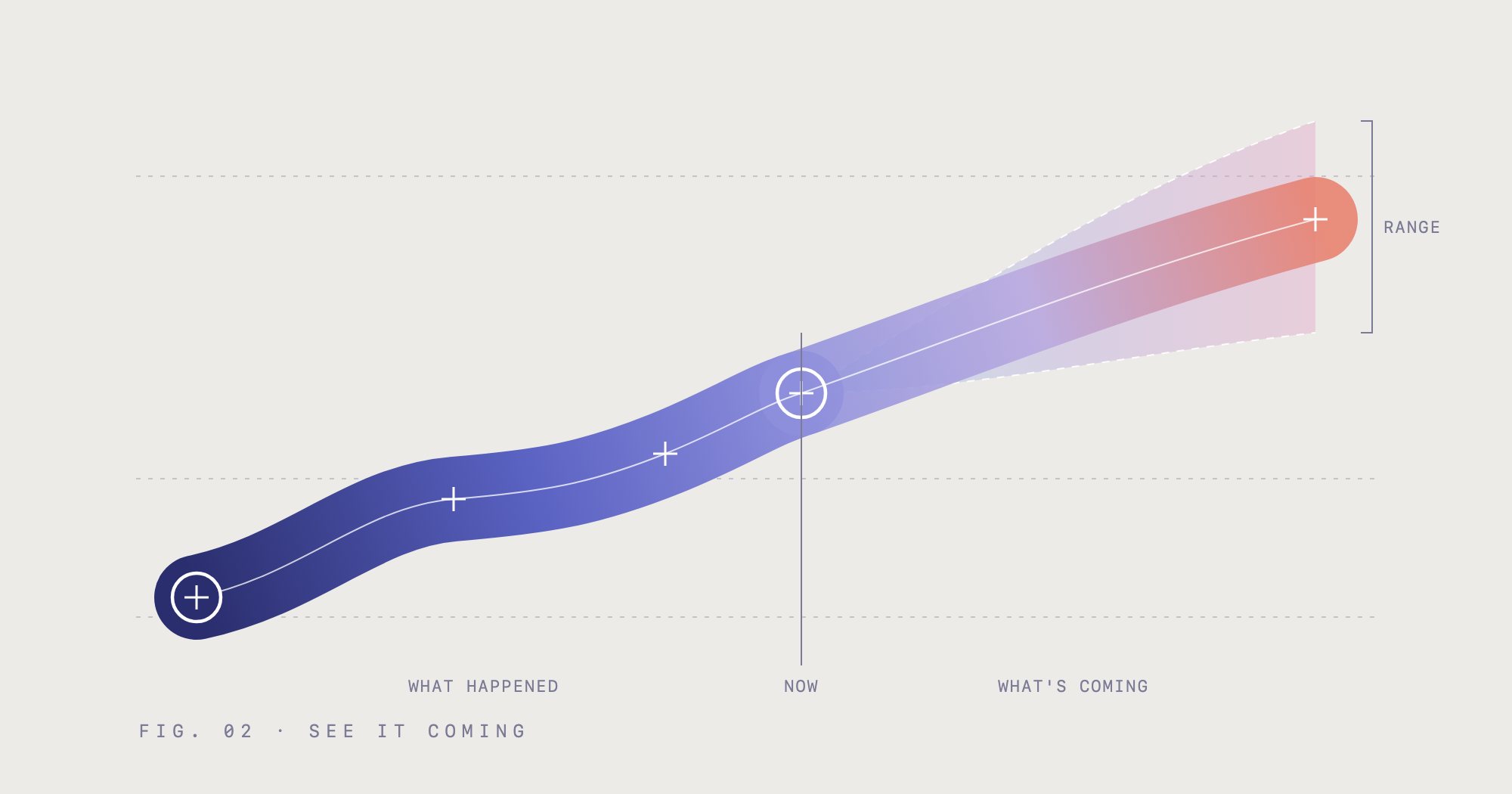
Most owners think they know where the business is headed. They don't. They know where it's been.
Two numbers run most small businesses. The balance in the account, and a feeling. Both look backward. By the time either one tells you something's wrong, the month that caused it is already over.
That's not a character flaw. It's a visibility problem. And visibility problems have a fix.
Ask the question out loud
A forecast is the answer to one question: if nothing changes, where does this end up?
Not a spreadsheet only your accountant can read. Not a chart that climbs forever. One honest line, built from what you already know. Clients. Price. Costs. Timing.
A forecast doesn't predict the future. It makes the present clear enough to change it.
The Sunday-night number
Every owner knows the feeling. Sunday night, the house is quiet, and you're doing math in your head that never quite adds up.
A forecast trades that feeling for a figure. And a figure you can act on. Raise the price. Hire before the rush, not during it. Say no to the work that quietly loses money.
I run a lean business too. Writing the numbers down didn't change them. It changed what I did next.
That's the whole point. Not certainty. Clarity.
So this week, write down one number: what next quarter looks like if nothing changes. Ten minutes. A napkin is fine.
You can't steer what you can't see. Start seeing it.