
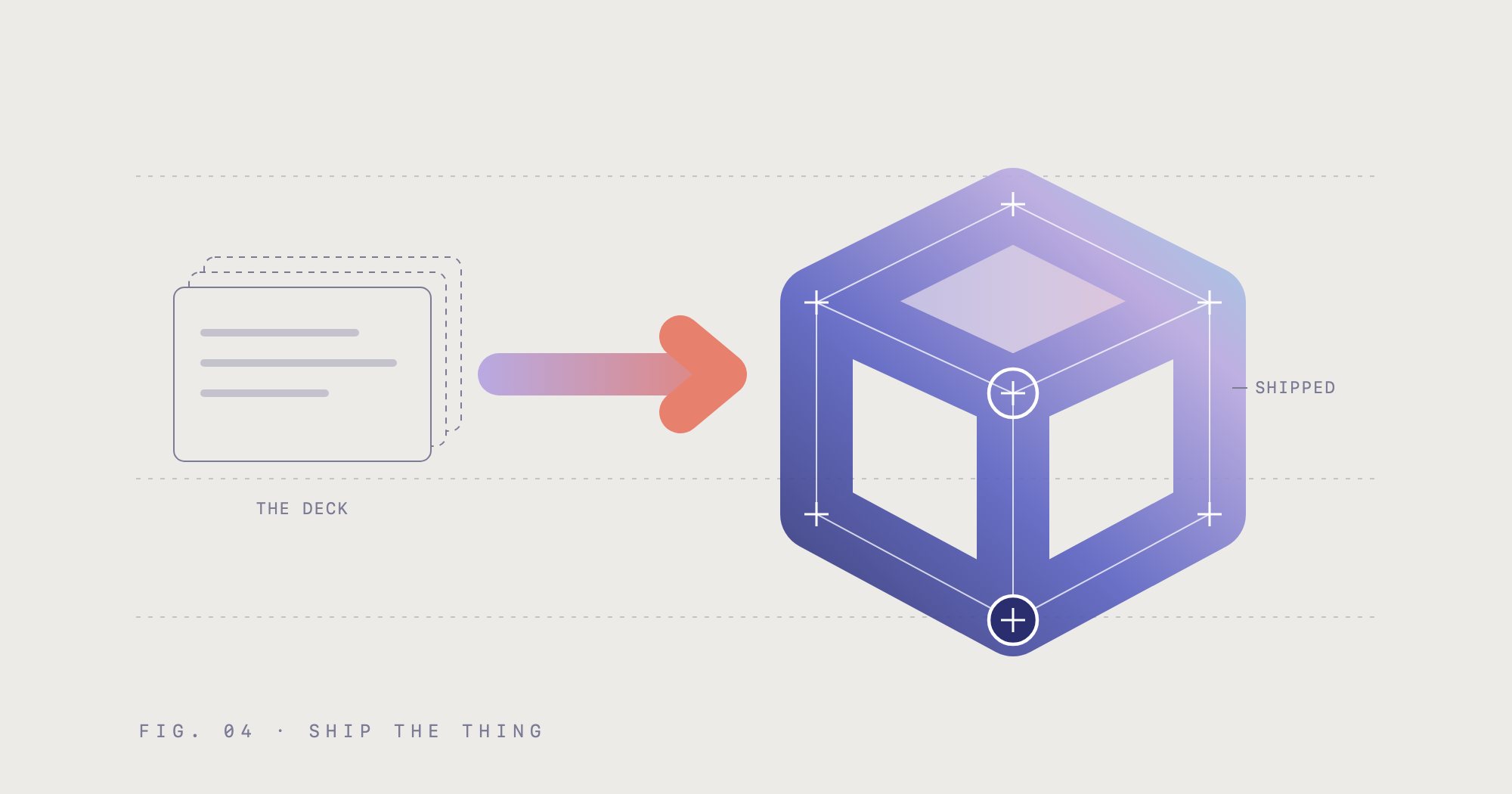
Most ideas don't die in the market. They die in the deck.
Forty slides. A logo. A projection that climbs to the right. And nothing a customer can actually touch.
The deck feels like progress because it's tidy. But it answers the wrong question. It tells you whether an idea sounds good in a room. Not whether it works in the world.
A deck proves you can describe it. Only the thing proves it works.
Make being wrong cheap
You're going to be wrong about something. Every first version is. That's not the risk.
The risk is finding out late. After the hire, the build-out, the launch. When being wrong costs a quarter instead of a weekend.
So build the smallest real version first. Put it in real hands. Ten minutes of someone using it will teach you more than a month of meetings.
Let the world vote early
This works for an app. It works just as well for a new service, a new location, a new offer.
Sell it before you build all of it. Run the pilot before you hire the team. Charge for the first version, even if it's rough. Especially if it's rough.
The world's vote is cheap early. It gets expensive fast.
So pick the idea you've been polishing. What's the smallest piece someone could use this week?
Ship that.